
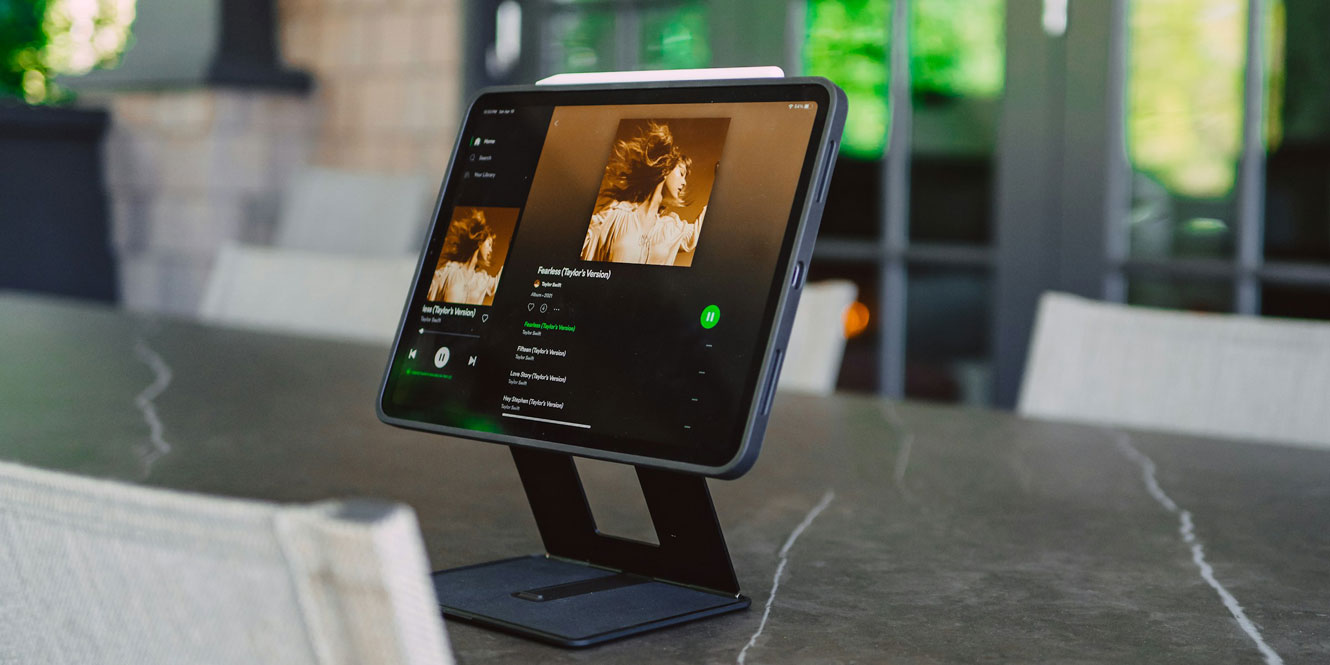

It’s safe to say that over the past two decades, music streaming has changed the way we listen to music forever. While you might not own a physical copy of the music, streaming services such as Spotify and TIDAL have made it easier than ever to discover new artists and songs.
However, choosing the right platform for your music needs can be overwhelming, given the many options available. In this article, we explore the best music streaming services, helping you understand what each service offers. From exclusive content to sound quality and user experience, we’ll break down the top choices so you can find the right one for you.
In a hurry?
Before we get started, here’s a quick rundown of our favourite picks
| Spotify | Easy-to-use platform with bespoke recommendations and access to over 100 million songs and podcasts. |
| Qobuz | For a budget-friendly price, you can enjoy a studio-quality sound with offline listening |
| TIDAL | Relish the best-in-class audio formats, TIDAL Live, and exclusive content |
The best music streaming services
1. Spotify – The best user-friendly service
 Quality: 320kbps encoded in 16bit at 44,100 kHz
Library size: Over 100 million songs
Platforms: iOS and Android apps, desktop app, web player, smart TV apps, and built-in speaker/amplifier support
Pros
- Broad selection of music, podcasts, and audiobooks
- Personalised playlists and recommendations
- Extremely user-friendly interface
Cons
- No support for hi-res audio
In today’s audio landscape, you’d be hard-pressed to find someone that doesn’t use Spotify. This platform has amassed over 602 million users worldwide, including 239 million paying subscribers.
This is probably down to its extensive library. You can access a library of over 100 million songs across various genres and six million podcasts – perfect for office work or long car journeys.
A recent update also gives you access to over 250,00 audiobooks. However, it’s worth noting that audiobooks are available for only 15 playing hours with premium. Otherwise, you will have to make a separate payment per book.
The subscription plans are also a strong point. The free version, while ad-supported, grants access to a significant portion of Spotify’s library. If you opt for Spotify Premium, you’ll pay just over £10 per month, which eliminates ads and grants unlimited access to Spotify’s full suite of features. You’ll even have the ability to download content, so you can listen to your entertainment offline, whenever and wherever you like.
Spotify can be accessed through the desktop web player or via the dedicated app which you can download on all IOS and Android devices. The platform also comes integrated into various hi-fi systems such as the Eversolo DMP-A6 Network Audio Streamer and Naim Uniti Atom All-In-One Wireless Music Player.
The app’s interface is very easy to use and provides personalised playlists and recommendations based on your listening habits, making discovering new music a delight.
Spotify displays the lyrics to a song while it is playing. A lot of well-known tracks also give the option to watch the music video while listening.
However, while the support for 16bit/44,100 kHz audio is more than commendable, it doesn’t quite reach the sound quality levels of many other streaming platforms (the Spotify vs. Tidal debate is a big one!). This could be a letdown for many audiophiles.
Having said that, if you’re a casual listener who wants to broaden your music and podcast tastes, Spotify is an excellent choice.
2. Qobuz – The best service for hi-res audio
 Quality: 6,971 Kbps, FLAC 24-bit/192 kHz
Library size: Over 100 million songs
Platforms: iOS and Android sources, desktop app, and web player
Pros
- Superior studio-level audio quality
- Offers a broad range of music articles and reviews
- Thousands of human-curated playlists
Cons
- Doesn’t offer access to music videos or podcasts
If it’s hi-res audio quality you’re after, Qobuz is very hard to top.
It supports CD-quality 16-bit/44,1 kHz and hi-res FLAC 24-bit/192 kHz audio, one of the highest available on any streaming service. It means you get to experience music as the artist intended, with every detail and nuance reproduced.
Qobuz’s extensive library of more than 100 million songs covers a vast range of genres, including rock, classical, jazz, electronic, pop, and more. It’s great for music enthusiasts with varied tastes.
We have to talk about the original editorial articles. Written by experts, these articles cover a wide range of topics, from deep dives into specific artists, albums, and genres to insights into music history and trends. The editorial section also includes reviews of hi-fi and home cinema equipment, helping you to elevate your soundstage.
The downloadable app and web player look very sleek and are very simple to use. It offers a seamless browsing experience with a dedicated Discover page, making it easy to explore new music.
Like many streaming services, Qobuz includes a vast array of human-curated playlists based on different genres and themes. For bespoke listening, the ‘My Weekly Q’ feature will produce a playlist that refreshes every week based on your listening habits.
While you’re there, you should also check out the AV.com playlist!
Other notable features include the ability to listen offline and the compatibility with main wireless devices like Chromecast and Roon multi-room platforms. This service is also supported by many AV receivers, bringing the unique sound of Qobuz right into your front room.
A single solo account costs around £10 per month, while a family plan allows up to six people to use Qobuz for just over £17 a month. We feel this is a very reasonable price considering all the quality that you get.
3. TIDAL – The best service for audiophiles
 Quality: 160kbps (free), 1411kbps, CD-quality streaming, 24-bit/96kHz
Library size: Over 110 million songs
Platforms: iOS and Android sources, desktop app, and web player
Pros
- Hi-res 24-bit/192 kHz audio with support for Dolby Atmos
- TIDAL Live lets you enjoy music in real-time with others
- Provides exclusive and early releases of music
Cons
- Selection of podcasts is limited
TIDAL is well-suited to audiophiles and those who value a rich and dynamic listening experience. It offers hi-res 24-bit/192 kHz audio with support for Dolby Atmos, ensuring an immersive listening experience.
The library includes over 110 million songs and 650,000 videos, so there’s plenty of music to choose from. TIDAL also has an interesting series of podcasts that focus on the creative process behind music, acting, and writing.
There isn’t a broad selection of third-party podcasts, but if music is your priority, TIDAL’s extensive library will immerse you in any genre of your choice. TIDAL’s discovery and personalised recommendation features ensure you always have fresh, tailored content based on your listening habits.
As with many streaming services, TIDAL features an ‘offline mode’, allowing you to download albums and tracks to enjoy without an internet connection. This is perfect for uninterrupted listening during commutes or travel.
The ‘TIDAL Live’ function lets you watch real-time broadcasts from your favourite artists. Better still, and perhaps one of the most exciting features of the platform is the exclusive content and advanced access to songs.
This service offers multiple subscription options, including the individual plan at under £11 per month in which you can enjoy countless hours of ad-free listening, unlimited skips, and editorially curated playlists. The family plan, at just under £17 a month, allows up to six users to enjoy TIDAL’s features.
With TIDAL Connect, you’ll be able to stream music directly from the TIDAL app to compatible amplifiers or speakers. This offers an effortless method to experience high-quality audio without the need for a Bluetooth connection.
4. Apple Music – The best service for IOS users
 Quality: 24-bit/48kHz, Hi-Res Lossless (up to 24-bit/192kHz) and Dolby Atmos
Library size: Over 100 million songs
Platforms: iOS and Android sources, desktop app, and web player
Pros
- Supports lossless and Dolby Atmos spatial audio
- Lets you enjoy live radio stations and interviews with musicians
- Seamlessly integrated with your iTunes library
Cons
- No direct access to podcasts
If you’re part of the Apple ecosystem, you probably already have Apple Music – but if you don’t, it might be the best fit for you. You can upload your existing iTunes music collection and access it alongside Apple Music’s extensive catalogue.
As with Spotify, this service boasts a library of over 100 million songs. It utilises human experts and algorithms to offer song/album recommendations based on your most played songs as well as curated playlists.
Apple Music streams music in high audio up to 24-bit/48-192kHz, with Dolby Atmos allowing for spatial audio that creates a three-dimensional listening experience.
The ability to download music for offline listening is another advantage, perfect for when you’re on the go. This streaming service also provides precise, beat-by-beat lyrics, so you can follow along.
But it isn’t just about music. The platform supports dozens of exclusive radio shows, such as Zane Lowe’s show, Elton John’s Rocket Hour, and The Ebro Show.
Price-wise, Apple Music is very similar to Spotify. You can sign up for individual (just over £10), family (over £15), and student plans (over £5).
Despite the broad library size, this service doesn’t include access to podcasts or audiobooks which are quite prominent on many rival platforms. Also, while Apple Music offers cross-platform compatibility, it can be quite limiting when used on Android and Windows devices.
All-in-all though, Apple Music is a great, affordable option for iOS users that value immersive listening.
5. Deezer – The best service for extra features
 Quality: 16-bit/1,411 Kbps (lossless CD quality audio), Sony 360 Reality Audio
Library size: Over 120 million songs
Platforms: iOS and Android sources, desktop app, and web player
Pros
- Includes the track-identifying SongCatcher feature
- Broad library of music library with accompanying song lyrics
- Themed music quizzes
Cons
- Less sophisticated algorithmic recommendations
Even though it might not be as well-known as many others on this list, Deezer should definitely be considered.
This platform lets you choose from over 120 million tracks which can be played at 1411kbps audio, giving you a detailed sound. Deezer also supports Sony 360 Reality Audio, so you can enjoy 360-degree virtual space while you listen.
As with many services, Deezer provides accompanying song lyrics while you listen to music, perfect if you want to sing a whole album off by heart.
What sets Deezer apart from the rest is the amount of unique features it offers.
With the ‘Shaker’ feature, this platform will combine all your friends’ favourite songs with your own and create a shared playlist. This is the ideal soundtrack for parties, long car journeys, and group holidays. The ‘TunemyMusic’ function lets you transfer your music libraries and playlists in Deezer from other streaming services such as Spotify, Apple Music, Tidal, and YouTube.
Similar to Shazam, the SongCatcher feature will listen to music and identify the artist and title immediately. There’s also a music quiz, where you have 30 seconds to guess the song title and the name of the artist – a fun way to test your music knowledge.
The user interface is intuitive and easy to navigate, featuring an Explore tab for the latest trends, editor picks, and more. It is worth noting that, while this service does a stellar job with music and podcast recommendations, we feel it isn’t quite as effective as many other selections.
Many high-quality speakers like KEF‘s LSX II and LS50W MKII models now support Deezer. This means you can savour all your songs in a wide-reaching soundstage.
Pricing is also very reasonable. The free version provides access to a wide range of features but includes ads, which can be frustrating. Deezer Premium offers an ad-free service, offline listening, unlimited skips, and high-fidelity sound at around £12 per month. There is also a family plan available at just under £17.
6. Amazon Music Unlimited – The best value-for-money service
 Quality: 3730 Kbps (HD), 24 bits/ 192kHz, Dolby Atmos, Sony 360 Reality Audio
Library size: 100 million songs and podcasts
Platforms: iOS and Android sources, desktop app, web player, and Echo devices
Pros
- Discounted price for Amazon Prime members
- Excellent support for HD and 3D audio
- Lets you listen to music offline
Cons
- No video content
Amazon Music Unlimited covers all the basics you would want from a modern streaming service at an affordable price. For Prime members, the monthly fee is just under £10, while non-Prime members pay around £11.
It boasts an impressive library of 100 million songs and podcasts, catering to all your entertainment needs. The support for 3730 Kbps audio is considerably higher than Spotify and brings out the subtle nuances in your favourite songs.
This service utilises Dolby Atmos and Sony 360 Reality Audio technology to offer over 1,000 spatial remixes, allowing you to enjoy music in an immersive 3D audio space. These mixes can played on a Dolby Atmos-enabled soundbar, Amazon Echo Studio, or Echo Dot, ensuring a wide soundstage.
The offline listening feature is perfect for those who enjoy music on the go without worrying about internet connectivity. Plus, the unlimited skips and ad-free experience will make your listening sessions much more enjoyable.
The Amazon Music app is available for download on any IOS, Windows, or Android device and is supported by many audio systems including the Ruark Audio R3S. This adds a level of convenience and flexibility, making it easy to access your music library wherever you are.
The app allows you to shuffle songs, transfer existing playlists from other music platforms, and keep up with the latest releases via the ‘Discover New Music’ section. It offers a simple, grid-like design where you easily scroll through different albums, playlists and podcasts with ease.
Even though other rivals have the upper hand, this service will also create playlists and deliver recommendations based on your activity.
However, despite having an extensive library size, Amazon Music Unlimited lacks the exclusive content and early releases that some competitors would offer. There is also no option to view music videos.
But all of these are simply nit-picks. Amazon Music Unlimited stands out for its high-quality audio, user-friendly features, and great affordability make it a brilliant choice for any music lover.
7. YouTube Music – The best service for music-videos
 Quality: 256 Kbps
Library size: Over 100 million songs and videos
Platforms: iOS, Android and a web player
Pros
- The free version offers a broad choice of features
- Music videos accompany every song
- Easy-to-use YouTube Music app
Cons
- Audio quality is low compared with competitors
Unlike the other options on this list, YouTube Music is both an audio and visual platform. Part of the fun of listening to music by your favourite artists is to see the music videos they have created. YouTube music allows you to switch effortlessly between audio tracks and their corresponding music videos.
Alternatively, you can use the ‘audio-only’ setting to disable the accompanying video while you listen to music. It’s a great feature if you want to save battery life.
Unlike many streaming services, YouTube Music offers a substantial free version without the need for a subscription. You’ll have adverts but not enough to impact your listening experience, and you’ll have access to the entire catalogue.
For around £11 a month, though, you can relish ad-free listening, background play, and offline listening.
Personalisation is a strong suit of YouTube Music. The app provides customised playlists and mixes based on your listening habits. It also offers activity mixes tailored to different moods and times of the day, making it easy to find the right soundtrack for any occasion.
The platform’s discovery features allow you to explore music based on genres and moods, from hip-hop and pop to chill and workout playlists. Global top charts are also available.
The user interface is intuitive and neatly organised, with a library that stores all your liked and added songs, created playlists, and subscribed artists in one place.
While the low-detail audio may be a drawback, YouTube Music is a top pick if you want to stream all your favourite music videos in an instant.
How to choose the best music streaming service for you
Selecting the best music streaming service depends on several factors.
The most important thing to consider is the sound quality. Services like Tidal and Qobuz are renowned for their high-resolution audio, making them a great choice for audiophiles. Spotify and Deezer offer good sound quality, too, but would be best suited to casual listeners.
Next, think about the library size. A vast music library ensures you have access to a diverse range of genres, artists, and albums. Look for services that frequently update their catalogues and provide exclusive content from your favourite artists.
As with anything, you should also think about budget. Many services offer free versions with ads and basic features, which can be a good starting point. Yet, the free versions often come with limitations, such as lower sound quality and fewer offline listening options. Subscription plans usually start around £10 per month for ad-free listening and additional perks.
However, some platforms might be more expensive due to their premium features, so consider what fits within your budget. But if you’re going to pay for a streaming service, you may as well get your money’s worth. Look for services that offer additional content such as podcasts, audiobooks, or music videos. These features can enhance your overall experience and provide more entertainment options.
Offline listening is another useful feature, allowing you to download music and listen without an internet connection, which is great for travelling or areas with poor connectivity.
Finally, consider the user interface and ease of use. A well-designed app with intuitive navigation can make a big difference in your overall satisfaction with the service. Personalised playlists and recommendations based on your listening habits can also be a significant plus, helping you discover new music tailored to your tastes.
The history of music streaming services
In the early 2000s, platforms like LimeWire led the digital music revolution, allowing users to share MP3 files online. However, due to legal challenges, these platforms were eventually shut down.
The real transformation began with the advent of legal streaming services. Spotify, launched in 2008, was one of the first to offer a vast library of music either for free with ads or through a paid subscription. This model quickly gained popularity, providing an easy and legal way to access a diverse range of music. Apple Music followed in 2015, integrating smoothly with IOS devices and offering exclusive content.
The rise of music streaming services can be attributed to their sheer convenience. You can now access millions of songs from various genres on-demand, anywhere, and anytime. Whereas in the previous decades, you would need to either buy a physical copy from your local record shop or wait for your favourite tracks to come on the radio.
The availability of personalised playlists and features like offline listening have enhanced user experience. Additionally, these platforms have made discovering new music easier with algorithm-driven recommendations.
Today, streaming services dominate music consumption, accounting for the majority of global music revenue. This shift has revolutionised the music industry, changing how we discover, listen to, and share music.
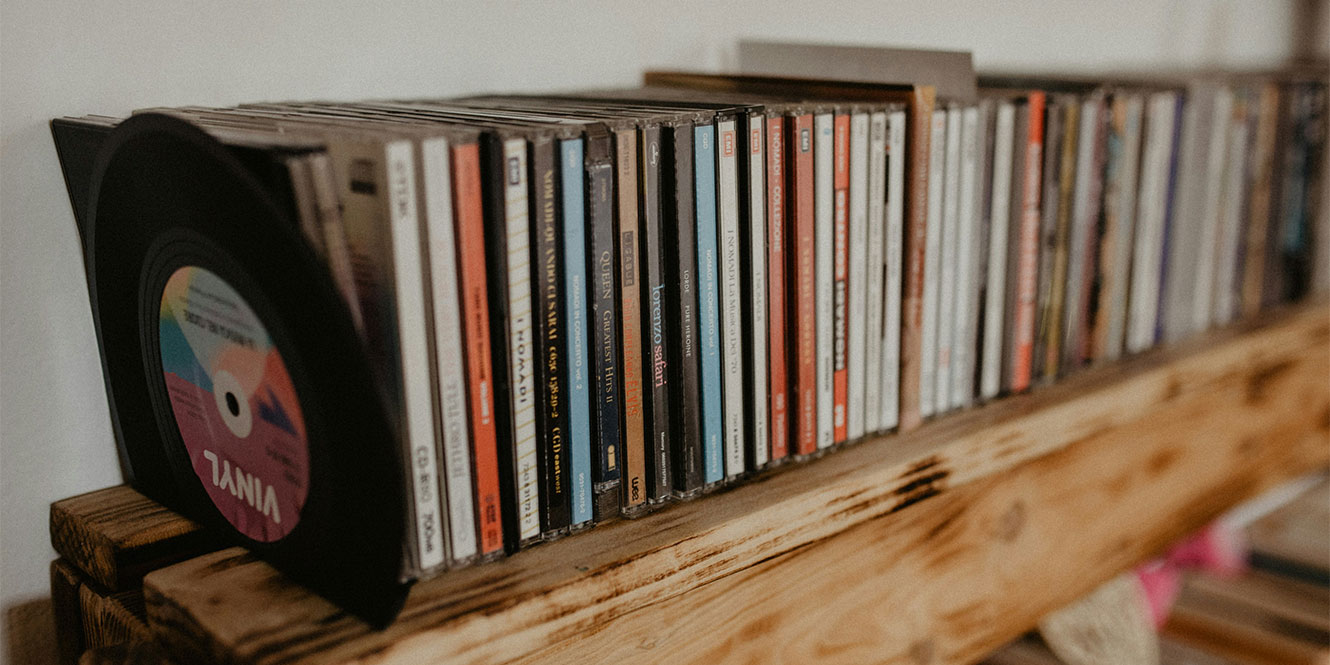
Is streaming better than CD and vinyl?
Streaming music is undoubtedly more convenient than CDs and vinyl. With a subscription and an internet connection, you have instant access to millions of songs from various genres. You can create playlists, discover new music through recommendations, and listen on multiple devices without the need to carry physical media.
However, when it comes to audio quality, CDs still hold the upper hand for many. CD players deliver uncompressed audio, providing a richer and more detailed sound. Audiophiles often prefer CDs for this reason, as the quality remains consistent regardless of internet speed or data limits.
That said, some streaming services now offer high-resolution streaming, matching CD quality. Services like Tidal and Amazon Music HD provide lossless audio, which significantly narrows the gap between streaming and physical media. These options are excellent for those who want the convenience of streaming without compromising on sound quality.
Vinyl, on the other hand, is often praised for its distinctive, analogue sound. Many enthusiasts argue that vinyl offers a more authentic listening experience, which would explain the modern popularity of turntables. However, vinyl’s sound quality can degrade over time due to wear and tear.
To find out more, check out our article on whether vinyl truly sounds better.
Overall, streaming wins for convenience and accessibility. CDs still offer superior, uncompressed audio quality, while some streaming services are closing the gap with high-resolution options. Vinyl has its unique charm and dedicated following, but it might not be the best for everyday listening due to its fragility and the need for a turntable.
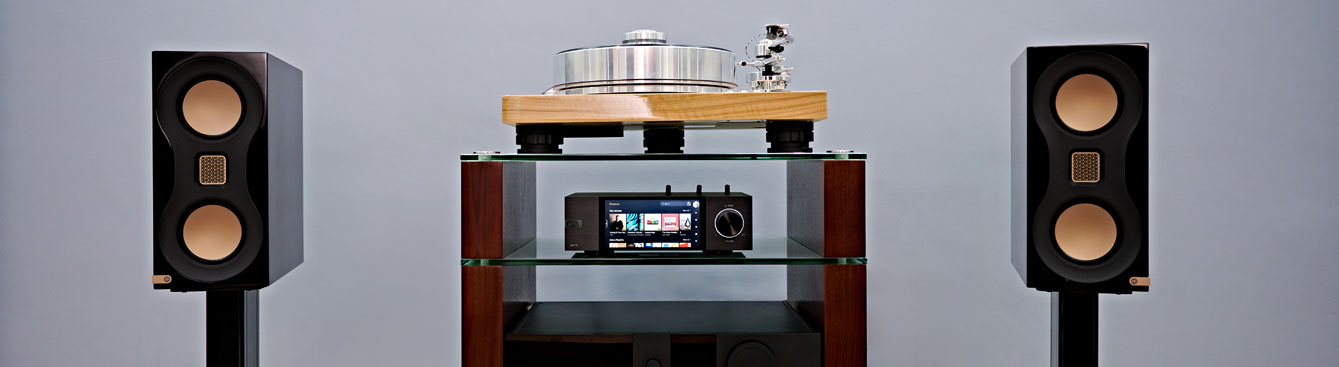
The AV playlist!
At our Bacup showroom, we have numerous demo rooms that let you test out audio systems to see if they are right for you. While many arrive with specific tracks in mind, we often get asked to suggest songs that best highlight a system’s capabilities. After years of demonstrations, we’ve accumulated songs that we feel best highlight audio quality, dynamic range, and clarity.
The result is our very own AV.com playlist.
You can listen to the AV playlist on Qobuz by simply typing “AV.com” into the search bar, and enjoy an immersive listening experience. This playlist is regularly updated to include new tracks that keep your system sounding its best.
FAQs
What is considered the best music streaming service?
The best music streaming service is widely considered to be Spotify. It offers a vast music library, a user-friendly interface, and personalised playlists. Its extensive features and social integration make it a popular choice among users.
What streaming service has the highest quality music?
Tidal is known for offering the highest quality music streaming. It provides lossless audio and high-fidelity sound, catering to audiophiles who seek superior sound quality. Tidal’s HiFi and Master Quality Authenticated (MQA) tracks stand out for their exceptional audio clarity.
Is there a music service better than Spotify?
Some users prefer services like Apple Music or Tidal over Spotify. Apple Music offers seamless integration with Apple devices and a large music library, while Tidal provides superior audio quality. The best service depends on individual preferences and priorities such as sound quality, device compatibility, and music discovery features.
Final thoughts
We hope our selection of the best music streaming services has helped you decide which one best suits your circumstances. Whether you value exclusive content, curated playlists, or high-resolution audio, there are plenty of options.
To find out how to get the most out of streaming in your hi-fi system, check out our reviews of WiiM Audio streamers, the FiiO R7, and the Eversolo DMP-A8. You can also look at our diverse selection of streamers.
Thank you for reading and we’d love to hear your thoughts in the comments below!








I have to comment on one aspect of Tidal, and another regarding Amazon. I am a paid user of Tidal, Spotify, Amazon HD, and YouTube and have been for many years.
I live in a rural, mountainous area with, until Starlink became available, very low quality to frequently inoperative internet. Quite a shocking change from my previous 150mb cable service, and also for being, as a crow flies, 140 miles from Silicon Valley.
Regarding Tidal, the app is fairly user friendly, though leans toward promoting what the investors think I ought to listen to first. My biggest issue with Tidal however is it’s very in consistant offline usability. I frequently am unable to be online, both on my property and whilst commuting to and from work, as well as when at work. Very, very frequently the app will refuse to play any downloaded content, unless it can access the web, which completely eliminates the utility of having an ‘offline’ “feature”.
Regarding Amazon, perhaps unsurprisingly, given it’s ownership, while I commend them for first increasing the fidelity of files/streaming for my level of service and subsequently lowering the price to make this quality available to all paid subscribers, their recent increases for paid subscribers to continue to be free of advertising interrupting the product are most unappreciated.